
Contents
When a pipe breaks, you need to act fast to limit water damage and avoid costly repairs. First, shut off the water supply so the leak stops. Then remove standing water and dry the area, including hidden edges and baseboards. After that, water damage repair and clean affected surfaces before mold can start. What you do next can determine how much of the structure you’ll actually save.
Key Takeaways
- Shut off the main water supply immediately and relieve pressure by opening a nearby faucet.
- Notify everyone in the household and keep them away from the damaged area.
- Remove standing water with towels, a wet/dry vacuum, or a pump, then start drying.
- Repair or replace the broken pipe, and inspect for hidden damage, corrosion, or loose joints.
- Clean, disinfect, and monitor the area until moisture readings are normal before restoring materials.
Shut Off Water for a Broken Pipe
If you spot a broken pipe, shut off the main water supply immediately to stop more water from entering the damaged line. You should know your shutoff valve location before trouble starts, because quick action protects your home and keeps the damage manageable.
Follow the valve’s turn direction until water flow stops, then open a nearby faucet to relieve pressure in the line. If the valve won’t move, use your emergency procedures plan and call a plumber right away.
After the water is off, document the break with photos for insurance claims and note the time you acted. Tell everyone in your household what happened so they can stay clear of the affected area and support the next repair steps.
Remove Water and Dry the Area
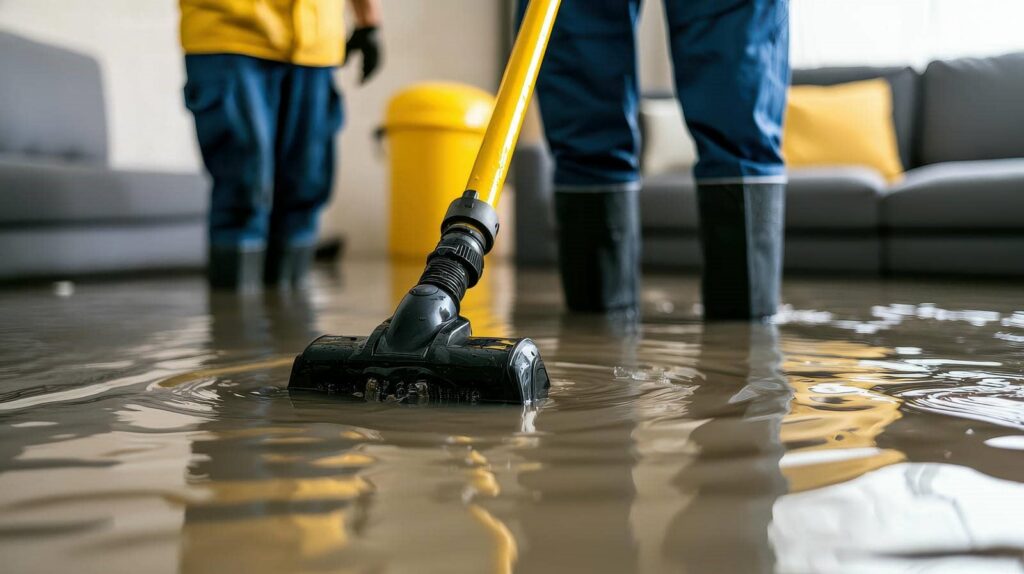
Now remove standing water as quickly as possible with a wet/dry vacuum, mop, towels, or a pump, depending on how much water is present.
Move methodically so you don’t miss low spots, baseboards, or corners. Focus on water extraction first, then open windows and doors if weather allows, and run fans to keep air moving.
Set up a dehumidifier to support moisture control and help you reduce dampness in walls, flooring, and cabinets. Lift wet rugs, pads, and small items so air can reach both sides.
Check hidden areas behind furniture and under sinks, since trapped moisture can linger there. Keep monitoring surfaces until they feel dry to the touch and humidity drops.
That’s how your team protects the space and gets drying back on track.
Repair the Pipe and Clean Up Damage
Once the area is dry enough to work safely, repair the broken pipe or have a licensed plumber replace damaged sections, fittings, or seals to stop the leak at the source.
Then perform a full pipe inspection for hidden cracks, corrosion, or loose joints, and document your damage assessment before you restore finishes.
Remove wet insulation, warped drywall, and contaminated debris from the work area so mold doesn’t take hold.
Clean and disinfect hard surfaces, then check subfloors and framing for staining or soft spots.
If you spot ongoing seepage, shut off water and recheck connections.
Replace only dry, sound materials, and keep the space ventilated until moisture readings return to normal.
You’ve got this—steady, methodical work protects your home and your crew.
Frequently Asked Questions
What Causes Pipes to Burst Unexpectedly?
You’ll see pipes burst from frozen pipes, high pressure, corrosion issues, or poor insulation. You can reduce risk by insulating lines, monitoring pressure, and replacing aging sections before failures hit your home.
How Do I Tell if Hidden Water Damage Exists?
You’ll spot hidden water damage by checking stains, bubbling paint, warped flooring, musty odors, and soft drywall. Use water detection tools and moisture inspection to confirm leaks before mold spreads or structural damage worsens.
Should I File an Insurance Claim Immediately?
Yes—file now. If you wait, will delays help you? You’ll preserve insurance coverage and start the claim process quickly. Document damage, call your insurer, and keep repairs temporary until the adjuster inspects.
Can Mold Grow After a Pipe Leak?
Yes, mold can grow after a pipe leak if you don’t dry materials fast. You should use leak detection methods, then apply mold prevention strategies, dehumidify, ventilate, and inspect hidden cavities within 24-48 hours.
When Should a Professional Plumber Be Called?
Call a professional plumber when a leak won’t stop, like when your kitchen line bursts at midnight; you need emergency plumbing. Regular preventative maintenance helps, but you can’t safely fix hidden pipe damage yourself.
Final Thoughts
By shutting off the water fast, you stop the damage from getting worse. Next, remove every bit of standing water and dry the area completely, including corners, baseboards, and hidden spots, so mold doesn’t move in like an uninvited guest. Then repair the pipe, clean the surfaces, and check for lingering moisture. If you keep the space ventilated and replace only sound materials, you’ll restore the area safely and efficiently.
Recent Posts
7 Home Water Damage Assessment Tips
Could a quick visual check reveal water damage before it spreads? Water damage assessment starts
10 Best Home Water Damage Assessment Tips
If you suspect water damage, you need to move quickly and assess it methodically. Home
How to Clean Up Pipe Damage Fast
When a pipe breaks, you need to act fast to limit structural damage and mold