
Contents
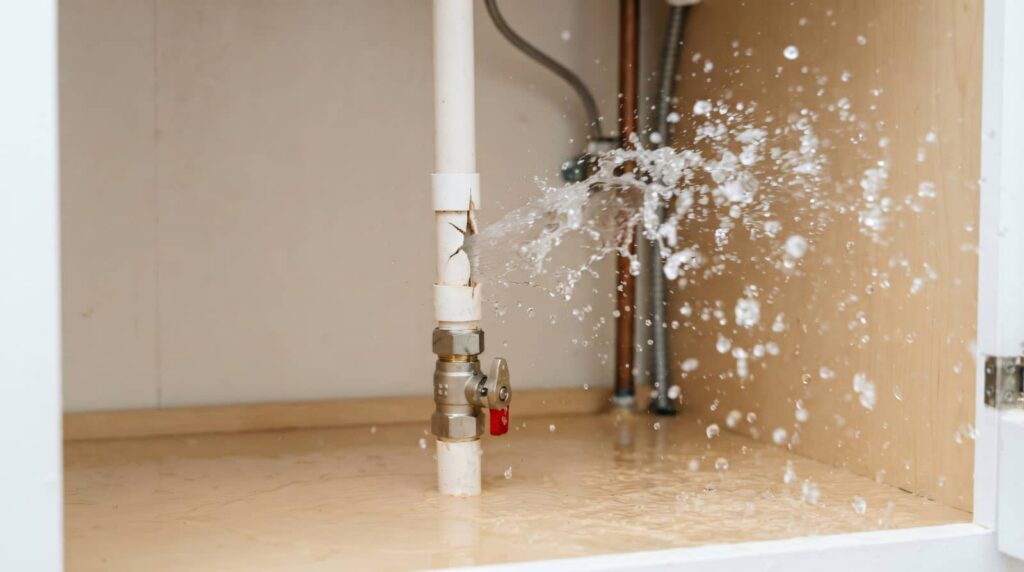
Your response to water damage in the first hour can make a major difference. Water damage restoration starts with shutting off the main supply, drying the area quickly, removing soaked materials, and disinfecting exposed surfaces before hidden damage spreads. When the leak has already soaked walls or flooring, a restoration pro can determine what’s salvageable and what needs to be removed or replaced.
Key Takeaways
- Shut off the main water supply immediately and stop the leak if it is safe to do so.
- Dry the area fast with fans, open windows, and a dehumidifier to limit mold and structural damage.
- Remove soaked drywall, insulation, and flooring that cannot dry properly.
- Clean and disinfect exposed surfaces to reduce bacteria and mold growth.
- Call a pipe water damage restoration professional for hidden damage and full repairs.
Shut Off the Water and Stop the Leak
The first step is to shut off the main water supply and stop the source of the leak right away. You protect your system by isolating the damaged line, then checking nearby valves for full closure.
If the leak isn’t obvious, use leak detection methods like listening for hiss, tracing damp spots, and monitoring water pressure at fixtures. Lower pressure can confirm a break, while steady pressure after shutdown tells you the leak may be past the main.
Tighten accessible fittings only if you can do so safely; otherwise, leave repairs to a qualified technician.
When you act fast, you limit damage and keep your team aligned on the next steps. Clear action now helps you restore control and prevent the problem from spreading.
Dry Out Pipe Water Damage Quickly
Once the leak is stopped, you need to dry the affected area fast to limit structural damage and mold growth. Open windows, run fans, and place a dehumidifier nearby to move humid air out and pull hidden moisture from surfaces.
Use moisture detection tools to check walls, baseboards, and subfloors, so you know where drying still needs work. Keep temperature steady and increase airflow in closed rooms to speed evaporation.
You should inspect daily and adjust equipment as readings drop. These preventive measures help you stay ahead of secondary damage and keep the space safe for your household.
Work methodically, document progress, and don’t stop until materials read dry and stable.
Remove Wet Drywall, Insulation, and Flooring
If drying efforts reveal swollen, soft, or musty materials, you need to remove them before hidden moisture spreads and mold takes hold. Cut out waterlogged drywall at least 12 inches above the damage line, pull saturated insulation from cavities, and lift warped flooring that can’t dry in place.
Work in sections so you stay organized and keep the space safe for your crew. Document each removal step for insurance claims, and label saved pieces if adjusters need them.
- Damp drywall crumbling into dust
- Insulation sagging like a wet blanket
- Floorboards cupping and separating at the seams
Bag debris promptly, seal it, and keep the area open for airflow. This approach supports mold prevention and helps you move forward with confidence.
Clean and Disinfect Affected Surfaces
Now that you’ve removed damaged materials, clean all exposed framing, subfloors, and remaining surfaces with a detergent solution to lift dirt and residue before disinfection.
Use clean cloths or scrub pads, and change solution when it looks dirty. Rinse only if the product label calls for it, then let surfaces dry fully.
Apply an EPA-registered disinfectant at the correct dwell time so it can work effectively. Focus on corners, seams, and any porous edges that stayed wet.
This surface treatment helps reduce microbial growth and supports mold prevention after pipe water damage.
Wear gloves and eye protection, and keep the area ventilated. You’re building a cleaner, safer space for your home team, so don’t rush the drying stage.
Call a Pipe Water Damage Restoration Pro
When pipe damage has spread beyond a small, contained area, call a water damage restoration pro to assess the structure, moisture levels, and hidden damage. You’ll get a clear plan fast, and that helps your crew avoid costly mistakes.
Pros use meters, thermal imaging, and extraction equipment to find water behind walls and under floors.
- Wet drywall with dark staining
- Buckled flooring near baseboards
- Damp insulation around pipe runs
They’ll also document losses for insurance claims and estimate restoration costs before repairs begin. That record helps you stay organized and keeps your project aligned with the rest of the home.
When you bring in the right team, you protect your space, your budget, and your peace of mind.
Frequently Asked Questions
How Can I Tell if the Pipe Damage Is From Freezing or Corrosion?
You can tell by looking: frozen pipes usually split or burst along sections exposed to cold, while corroded pipes show rust, pitting, or green buildup. Inspect leaks, texture, and color to confirm the cause quickly.
Will My Homeowner’s Insurance Cover Pipe Water Damage Repairs?
Usually, your homeowner’s insurance covers sudden pipe water damage, but not gradual leaks or neglect. Review your insurance policies, document damage assessments, and contact your adjuster quickly to improve your claim outcome.
How Long Does Pipe Water Damage Restoration Usually Take?
You’ll usually need 3–7 days, depending on the restoration timeline. After a damage assessment, you’ll know if drying, cleanup, and repairs can stay swift—or take longer if hidden moisture’s lingering.
Can Hidden Pipe Leaks Cause Mold Behind Walls?
Yes, hidden pipe leaks can cause mold behind walls. You should use leak detection early and prioritize mold prevention by drying materials fast, fixing plumbing promptly, and checking for damp spots, odors, or discoloration.
Should I Replace Old Pipes After a Water Damage Incident?
Yes, you should replace old pipes if you see signs of deterioration. You’ll weigh pipe replacement considerations, including corrosion, leaks, and material age, to protect your home and keep your system reliable.
Summary
Act fast when pipe water damage strikes, and you’ll limit the fallout. Shut off the water, dry the area, remove saturated materials, and disinfect surfaces before mold can take hold like an unwelcome guest. If the damage runs deep, call a restoration pro to assess hidden moisture and repair structural issues. Your quick, practical response can save time, money, and your property from further harm.
Recent Posts
Why Hire Pipe Damage Cleanup Experts?
You need fast cleanup, careful cleanup, and expert cleanup when pipe damage hits your home.
What Pipe Cleanup Experts Do Nearby
When a sewer line backs up in your basement after a heavy rain, nearby pipe
5 Best Water Damage Repair Services
When you face water damage, you need a repair service that responds fast, uses the