
Contents
When disaster strikes, how you respond can make all the difference. In the event of water damage recovery, time is of the essence, and taking immediate action is essential. You must assess the situation, ensure safety, and act swiftly to mitigate further harm. Each step you take can impact the outcome markedly. So, what are the critical steps you need to follow within the first 24 hours? Let’s explore them.
Key Takeaways
- Assess the damage immediately to identify the water source and document affected areas to prevent extensive issues.
- Ensure safety by turning off utilities and using protective equipment to avoid hazards.
- Quickly remove standing water using appropriate equipment, such as submersible pumps, to minimize damage.
- Thoroughly dry affected areas with ventilation techniques and dehumidifiers to prevent mold growth.
- Clean and disinfect surfaces using EPA-approved products to eliminate contaminants and ensure safety.
Assess the Damage Immediately
When water damage strikes, it’s crucial to assess the damage immediately to prevent further complications.
Start your damage evaluation by identifying the water source—this could be a burst pipe, a leaking roof, or an overflowing appliance. Time is of the essence; the longer you wait, the more extensive the damage can become. Document the affected areas, noting any visible signs of water intrusion, such as discoloration or warping.
Next, check for hidden moisture behind walls or under floors, as this can lead to mold growth if left untreated.
Don’t overlook the impact on your belongings; assess how your furniture, electronics, and personal items have been affected.
Ensure Safety and Turn Off Utilities
Before you start any recovery efforts, make sure to assess immediate hazards like electrical risks or structural instability.
Locate the main shut-offs for water, gas, and electricity to prevent further damage or injury.
Equip yourself with personal protective equipment, such as gloves and masks, to safeguard against contaminants in the affected area.
Assess Immediate Hazards
Evaluating immediate hazards is essential in the aftermath of water damage, as safety must always come first.
By identifying potential risks, you can protect yourself and your loved ones from harm.
Here are key steps to take:
- Check for electrical hazards: Look for downed wires or sparking outlets.
- Assess structural damage: Inspect walls, ceilings, and floors for signs of collapse.
- Identify flood risks: Be aware of any standing water that may contain contaminants.
- Evaluate mold growth: Monitor damp areas that could lead to health issues.
Locate Main Shut-Offs
Locating the main shut-offs for your utilities is essential after water damage, as this step can prevent further complications and ensure safety.
First, find the water shut-off valve, typically located near your water meter. Turn it clockwise to stop the flow of water and minimize damage.
Next, locate your main valves for gas and electricity. Shut off the gas valve by turning it clockwise, and turn off the main electrical panel to cut power.
This ensures you’re protected from potential hazards during the recovery process. By promptly shutting down these utilities, you safeguard your property and contribute to a collective effort in maintaining a safe community.
Act swiftly—every second counts.
Use Personal Protective Equipment
After ensuring the utilities are shut off, your next step is to prioritize safety by using personal protective equipment (PPE).
This protective gear is essential to shield yourself from potential hazards during water damage recovery. Follow these safety protocols to keep yourself safe:
- Gloves: Wear waterproof gloves to protect your hands from contaminants.
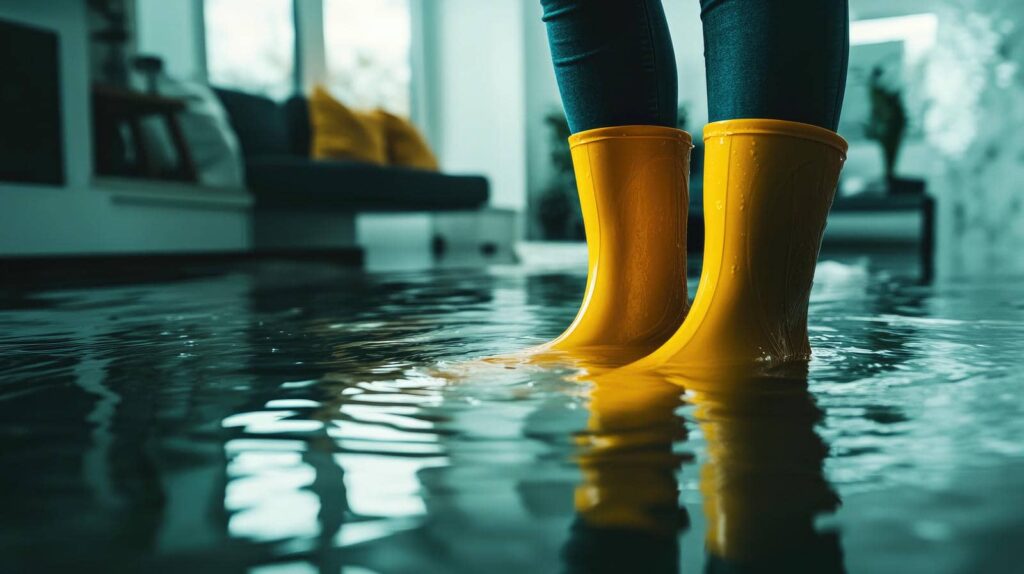
- Boots: Use waterproof boots with good traction to avoid slips and contact with dirty water.
- Masks: A mask helps prevent inhalation of mold spores and other harmful particles.
- Goggles: Protect your eyes from debris and splashes during the cleanup process.
Remove Standing Water Quickly
When a water leak occurs, it’s crucial to act swiftly to remove standing water, as lingering moisture can lead to structural damage and mold growth.
Start by evaluating the extent of the water damage, then gather your equipment for effective water extraction. Utilizing a submersible pump can greatly expedite the process; make sure you understand the pump operation to maximize efficiency. If the water is deep, you might need multiple pumps or a larger unit.
As you work, keep safety in mind—verify the area is safe and that you’re wearing appropriate gear. The sooner you remove the water, the better your chances of preventing further issues.
Dry Affected Areas Thoroughly
As you begin the drying process, it’s essential to address all affected areas promptly to prevent further damage and mold growth.
Start by implementing effective ventilation techniques and utilizing the right drying equipment. Here’s a streamlined approach to ensure thorough drying:
- Open Windows and Doors: Increase airflow by allowing fresh air to circulate throughout the space.
- Use Fans: Set up high-velocity fans strategically to enhance evaporation in key areas.
- Deploy Dehumidifiers: These devices will extract moisture from the air, making it easier for surfaces to dry.
- Check Hidden Areas: Don’t forget to inspect behind walls, under carpets, and in crawl spaces, as moisture can linger in these spots.
Clean and Disinfect Surfaces
Immediately tackle the cleaning and disinfecting of surfaces to eliminate any lingering contaminants and prevent health risks. Use effective cleaning techniques that target areas affected by water damage, such as countertops, floors, and furniture.
Start by removing any debris or dirt before applying disinfectant products. Opt for EPA-approved disinfectants to ensure you’re using safe, effective solutions. Apply these products according to the manufacturer’s instructions, allowing sufficient contact time to kill harmful pathogens.
Pay special attention to high-touch areas like doorknobs, light switches, and faucets, as these are hotspots for bacteria and viruses. Don’t forget to wear protective gear, including gloves and masks, to safeguard yourself during the cleaning process.
After disinfecting, ventilate the area to ensure proper air circulation. By following these steps, you’ll foster a healthier environment for you and your loved ones, reinforcing a sense of safety and community.
Inspect for Mold Growth
Mold can begin to develop within 24 to 48 hours after water damage occurs, making it essential to inspect your home promptly.
Ignoring mold growth can lead to health issues and costly repairs, so take action right away.
Here are key steps to ensure mold prevention:
- Check for Visible Mold: Inspect areas affected by water, focusing on walls, ceilings, and corners.
- Monitor Indoor Humidity: Keep humidity levels below 60% to discourage mold growth. Use dehumidifiers if necessary.
- Examine Hidden Spaces: Don’t forget to check behind appliances, under sinks, and in attics or basements.
- Assess Ventilation: Ensure that areas like bathrooms and kitchens are well-ventilated to reduce moisture buildup.
Restore and Repair Damaged Property
Once you’ve addressed any mold concerns, it’s important to focus on restoring and repairing the damaged property to prevent further deterioration.
Begin by documenting the damage thoroughly for your insurance claims; this ensures you have a clear record of what’s affected.
Next, engage professionals in property restoration who can assess the situation and recommend the best approach. They’ll help you understand what can be salvaged and what needs replacement.
Prioritize structural repairs, as any delay can lead to more significant issues down the line. Don’t forget about vital systems like plumbing and electrical; addressing these quickly is critical for safety and functionality.
Finally, as the restoration progresses, maintain open communication with your restoration team and insurance adjuster. This teamwork speeds up the process and fosters a sense of belonging in your community as you rebuild your space.
Time is of the essence—act swiftly to reclaim your home.
Frequently Asked Questions
How Can I Prevent Water Damage in the Future?
To prevent water damage, invest in waterproofing techniques and commit to regular maintenance. Check your roof, gutters, and plumbing frequently, ensuring everything’s in top shape. Taking proactive measures now saves you from future headaches and expenses.
What Insurance Coverage Is Needed for Water Damage?
You’ll need a thorough homeowners policy with flood insurance to cover water damage. Confirm your policy limits align with potential risks, protecting your home and belongings. Don’t wait—evaluate your coverage to safeguard your future.
How Long Does Water Damage Restoration Typically Take?
Restoration’s a race against time. Typically, the water damage timeline spans a few days to weeks, depending on factors like severity, materials affected, and drying methods. Quick action can greatly shorten the process and restore your space.
Can I Handle Water Damage Recovery Myself?
You can handle water damage recovery yourself, but it’s essential to act quickly. DIY restoration involves thorough water extraction, and without proper equipment and expertise, you risk mold growth and further damage. Consider professional help for the best results.
What Are the Signs of Hidden Water Damage?
Have you noticed unexplained stains or a musty smell? These signs of hidden water damage can lead to mold growth and compromise your home’s structural integrity. Don’t wait; address these issues before they escalate.
Recap
By following these seven essential steps, you can tackle water damage like a skilled firefighter extinguishing a blaze. Acting swiftly minimizes long-term effects and restores your space to its former glory. Remember, each moment counts; the sooner you respond, the better your chances of preventing costly repairs and mold growth. Don’t wait—take charge of the recovery process and ensure your home is safe and sound. Your prompt action can make all the difference.
Recent Posts
Sewage Water Removal and Prevention Guide
Sewage water contamination poses significant health risks and can damage your property if not addressed
Key Steps for Checking a Flooded Basement
Flooded basements cause significant property damage and pose health risks. To effectively address this issue,
Top 5 Tips for Inspecting Flooded Basements
When you inspect a flooded basements, your first step is to assess the water level