
Contents
You may not realize that standing water under your home usually starts with a drainage failure long before you see moisture inside. When soil grading pushes runoff toward the foundation, or gutters dump water at the base, hydrostatic pressure can drive groundwater through cracks and joints. In some cases, plumbing leaks, sump pump issues, or crawl space condensation add to the problem, and the source isn’t always obvious yet.
Key Takeaways
- Poor grading, clogged gutters, or short downspouts can send rainwater toward the foundation instead of away from the home.
- Hydrostatic pressure can push groundwater through foundation cracks, joints, or gaps beneath the house.
- Plumbing leaks, including hidden pipe failures, can add persistent moisture under floors and in crawl spaces.
- Warm, humid air meeting cool crawl-space surfaces can cause condensation and standing water.
- Sump pump failures, sewer backups, or blocked drainage systems can leave water pooled under homes.
What Causes Standing Water Under Homes?
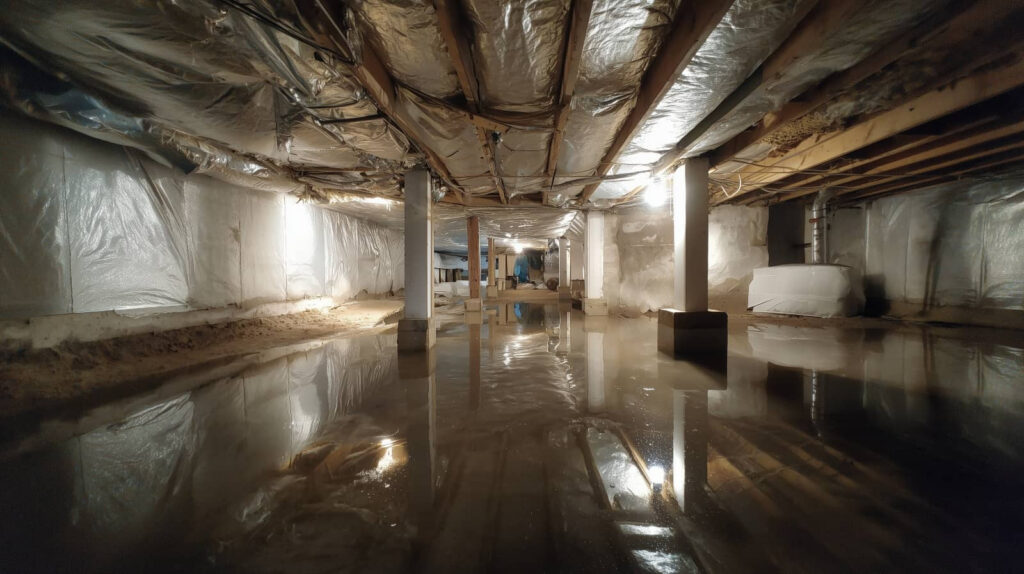
Standing water under homes usually develops when water can’t drain away fast enough from the crawl space or foundation area. You often see this when poor grading, clogged gutters, downspout discharge, or saturated soil keeps runoff near the structure.
Hydrostatic pressure can force groundwater through cracks, joints, or porous materials, and damaged plumbing can add more moisture. In humid climates, condensation on cool surfaces can also contribute.
When this water lingers, you increase the risk of water damage to framing, insulation, and subflooring, and you create health risks from mold, bacteria, and pests.
You’re not alone if this seems overwhelming; many homeowners face it. Careful drainage management and moisture control help you protect your home and maintain a safer, more stable environment.
How to Find the Source of Standing Water
To find the source of standing water, you need to trace how water enters, moves through, and collects under the home. Start with a careful water detection survey: inspect plumbing lines, HVAC condensate, and visible leaks, then map any wet spots against interior conditions.
Next, perform a moisture assessment on soil, framing, insulation, and vapor barriers to identify where readings spike. You should compare damp areas with recent rain, appliance use, and seasonal humidity patterns.
Use a flashlight, meter, and camera to document changes, so you can spot recurring pathways. If you track patterns methodically, you’ll feel more in control and better prepared to explain the issue to your contractor or inspector.
Precise observations help you isolate the source quickly and confidently.
Poor Foundation Drainage
Poor foundation drainage lets water collect near your footing instead of moving away from the home. You need drainage that directs runoff away from the foundation, but clogged drains or downspouts can trap water and overload the system.
Improper soil grading can also slope water back toward the structure, increasing saturation under the house.
Drainage Away From Foundation
When water doesn’t drain away from your foundation, it can collect at the perimeter and saturate the soil around the home. You need to move surface runoff outward so the grade sheds water, not traps it.
Proper foundation landscaping uses a consistent slope, firm soil, and clean edges to guide flow away from the slab or crawlspace. Moisture barriers can help limit upward migration, but they work best when you control exterior drainage first.
Check these factors:
- ground slope falls away at least 6 inches over 10 feet;
- downspouts discharge well beyond the wall line;
- soil stays compacted, not loose or settled.
When you address drainage this way, you protect your home and join other informed owners who manage moisture before it becomes structural stress.
Clogged Drainage Systems
If your drainage system clogs, water can’t move away from the foundation and starts backing up into the soil around the home. You may see this when gutters, downspouts, French drains, or perimeter tiles trap silt, roots, and debris.
Once flow drops, hydrostatic pressure rises against the foundation and pushes moisture into crawl spaces or under slabs. You can reduce this risk with regular drainage maintenance, including cleaning inlets, flushing pipes, and checking outlet discharge after storms.
Good water management means you verify that every component carries runoff efficiently and that no section holds sediment. When you stay ahead of blockages, you protect your home, preserve structural integrity, and join other homeowners who manage moisture with confidence and precision.
Improper Soil Grading
Improper soil grading directs surface water toward the foundation instead of away from it, allowing runoff to pool along the perimeter and saturate the soil beneath and beside the home.
You’ll often see this when the yard slopes toward the structure or settles unevenly after construction. That constant moisture increases hydrostatic pressure, weakens soil bearing capacity, and can trigger soil compaction issues near footings.
To reduce risk, you can assess:
- grade slope,
- downspout discharge,
- low spots beside walks.
Then apply drainage solutions like regrading, swales, or extensions that move water away fast.
When you address these conditions early, you protect the foundation, support your home’s stability, and join neighbors who keep their properties dry, sound, and resilient over time.
Grading and Gutter Problems
You can get standing water under your home when the yard slopes toward the foundation instead of away from it, because surface runoff then concentrates at the perimeter.
Clogged gutters also overflow and dump water beside the walls, increasing soil saturation near the footing.
If downspouts don’t discharge far enough from the structure, they keep recycling roof runoff into the same area and worsen the drainage load.
Poor Yard Slope
A yard with poor slope can direct runoff toward the foundation instead of away from it, allowing water to collect near the perimeter and seep into the crawl space or basement.
You can reduce this risk by evaluating yard design and landscape maintenance as a system, not separate tasks. Check whether the soil falls at least 6 inches over the first 10 feet from the house. Then confirm that swales move water laterally, not inward. Finally, inspect settled fill, compacted soil, and low spots after rain.
- Regrade depressions.
- Add soil to restore pitch.
- Maintain surface contours.
When you keep grades consistent, you protect your home and join neighbors who manage drainage proactively.
Clogged Gutters
Clogged gutters can overwhelm even a properly sloped yard by releasing roof runoff directly beside the foundation. When debris blocks flow, water backs up, spills over the eaves, and concentrates along the perimeter soil.
That added saturation can raise hydrostatic pressure and keep the crawlspace damp. You need consistent gutter maintenance to preserve roofline capacity and protect rainwater management at the site edge.
Inspect for leaves, shingle grit, and sagging sections, especially after storms. Clean channels, secure hangers, and confirm that water moves freely during rainfall.
If you stay proactive, you’ll reduce the chance that surface water pools under your home and create a healthier, more resilient structure for everyone in your household.
Downspout Drainage Issues
Poorly routed downspouts can dump dozens of gallons of roof runoff right at the foundation, especially when grading slopes back toward the house instead of away from it.
You need tight downspout placement and adequate downspout extensions to move water beyond the splash zone. When gutters discharge too close, soil saturates, hydrostatic pressure rises, and crawlspace or basement water can follow.
Check three variables:
- Downspout outlet distance from the wall
- Site slope near the perimeter
- Extension length and discharge path
If any of these fail, runoff pools under the footing and keeps the soil wet.
You’re not alone in facing this; many homes need simple rerouting to restore drainage performance and protect the substructure.
Crawl Space Humidity and Condensation
When warm, humid outdoor air enters a cool crawl space, the air can reach its dew point and deposit moisture on joists, ductwork, insulation, and the ground surface. You’ll often see this as beads, staining, or damp fiberglass.
Poor crawl space ventilation can intensify the problem when outside air stays trapped and cools overnight. Moisture barriers help by limiting evaporation from exposed soil, but they only work well when seams, edges, and penetrations are sealed.
If you belong to a home that smells musty or feels clammy, measure relative humidity and inspect for cold surfaces. You can reduce condensation by controlling air exchange, isolating the soil, and keeping temperature swings small. That’s how you protect the structure before damage spreads.
Groundwater Seeping Into the Crawl Space
If the ground around your home sits below the local water table or channels runoff toward the foundation, groundwater can enter the crawl space through cracks, unsealed joints, or porous block walls.
You’ll often see damp soil, efflorescence, or a persistent musty odor. Because pressure pushes water upward, the crawl space can collect moisture even when the surface looks dry.
To limit intrusion, you should:
- Regrade soil so water drains away from walls.
- Seal openings and install a continuous moisture barrier.
- Add perimeter drainage and sump control where needed.
When you understand these pathways, you can protect your home with the right fix and avoid supporting mold growth, structural decay, and unhealthy indoor conditions that affect everyone living there.
Plumbing Leaks Beneath the Floor
Hidden plumbing leaks beneath the floor can quietly pool water under a home long before visible damage appears. You may notice damp insulation, warped subflooring, or a musty odor before you see a drip.
Pressurized supply lines and drain joints can fail at fittings, beneath tubs, or under slab penetrations, letting water collect in concealed cavities. Because the leak stays hidden, moisture can spread into framing and flooring, increasing water damage and weakening materials you rely on every day.
Regular plumbing inspections help you identify small failures before they become structural problems. If you share a crawl space or basement, look for staining, corrosion, and soft wood.
Prompt repair keeps the issue contained and helps your home stay safe, dry, and dependable.
Sump Pump Failure and Overflow
When your sump pump loses power, it stops removing groundwater and standing water can accumulate under the home.
If the float switch sticks, fails to rise, or cycles incorrectly, the pump won’t activate at the right time.
If the overflow drain is blocked or undersized, water can back up and spill into the crawlspace or basement.
Pump Power Failure
A sump pump can fail to protect a home when a power outage, tripped breaker, burned-out motor, or disconnected discharge line stops it from moving groundwater away from the foundation.
You should treat this as a system-level risk, not a minor inconvenience. During wet weather, standing water can rise quickly and saturate the soil around your footing.
To reduce that risk, focus on:
- pump maintenance that verifies electrical load, outlet function, and clean components
- emergency backup power that keeps pumping during outages
- routine inspection after storms to confirm the pump actually cycles and discharges water
When you check these points, you protect your home and stay aligned with neighbors who take drainage seriously.
A reliable pump system lowers hydrostatic pressure and helps keep your crawl space dry.
Float Switch Problems
If the float switch sticks, misaligns, or fails to rise with the water level, the sump pump may not activate, and groundwater can spill into the pit, overflow the basin, and saturate the surrounding soil.
You can check for debris, tangled cords, or restricted movement during float switch maintenance, because even minor friction can prevent reliable cycling.
Test the switch by lifting it manually and watching whether the pump starts and stops at the correct thresholds. If it hesitates, chat with a qualified technician about float switch replacement before repeated failures let water collect under your home.
When you stay proactive, you protect your crawl space, support your drainage system, and keep your home’s foundation working with you, not against you.
Overflow Drain Issues
Overflow drain issues can show up even after a float switch checks out, because the sump pump still needs a clear path to discharge water safely. You may see standing water when the discharge line clogs, freezes, or backs up into the basin, forcing the pump to cycle without relief.
To protect your home, focus on drainage system maintenance and verify each component in sequence:
- Inspect the outlet for debris, kinks, or crushed pipe.
- Test the check valve for reverse flow.
- Confirm the drain exits far enough from the foundation.
These overflow prevention techniques help you isolate failures quickly. When you maintain the line, you reduce pressure on the pump and keep your home’s drainage network working with you, not against you.
Sewer Backups and Toilet Overflow
When sewer lines clog, lose slope, or surcharge during heavy use, wastewater can reverse direction and enter the home through toilets, floor drains, or low plumbing fixtures. You may notice slow flushing, gurgling, or sewage odors before a full backup develops.
These signals point to elevated line pressure or a downstream blockage, not surface drainage alone. Regular toilet maintenance helps you catch worn flappers, weak seals, and recurring clogs that worsen flow restrictions.
A sewer inspection can locate root intrusion, collapsed pipe sections, or grease buildup in the main line. If you live in a shared system, your neighbors may see the same pattern, which confirms a common source.
Treat any overflow as a contamination event, because it can saturate the floor system and spread beneath your home.
How to Fix Standing Water Under Homes
Fix standing water under a home by first identifying the source, then matching the repair to the failure mode. You’ll protect the structure faster when you test grading, gutters, downspouts, and plumbing leaks before choosing drainage solutions.
If you’re part of the crew maintaining the home, use this sequence:
- Regrade soil so water moves away from the foundation.
- Extend downspouts and clean gutters to reduce roof runoff.
- Install a sump pump, interior drain, or vapor barrier where groundwater persists.
Check crawlspace humidity, standing depth, and soil saturation after rain. Seal small foundation cracks, but don’t rely on sealant alone if hydrostatic pressure remains.
Consistent home maintenance keeps repairs effective, lowers mold risk, and helps you stay ahead of future water intrusion.
Frequently Asked Questions
How Often Should Crawl Spaces Be Inspected for Moisture Issues?
You should inspect your crawl space at least twice yearly for moisture issues, and after heavy rain. Consistent crawl space maintenance supports moisture prevention, helping you protect your home and stay connected to healthier spaces.
Can Standing Water Attract Pests Under a Home?
Yes, standing water can attract pests under your home because moisture accumulation creates ideal breeding conditions. You’ll reduce pest infestations by correcting drainage, sealing entry points, and monitoring humidity to protect your crawl space community.
Is Standing Water Under a Home Covered by Insurance?
Usually, you won’t get automatic coverage; about 60% of homeowners miss exclusions. You’ll need to review your insurance policies and coverage limits, because seepage, floods, and maintenance issues often aren’t covered, though endorsements may help.
What Health Risks Come From Mold in Crawl Spaces?
You can face respiratory irritation, allergies, asthma flare-ups, headaches, and fatigue from crawl-space mold. You’ll reduce these health effects with mold prevention: control moisture, improve ventilation, seal leaks, and inspect regularly for contamination.
How Long Does It Take for Structural Damage to Start?
Structural damage can start within weeks if you don’t control moisture. You’ll protect foundation integrity by improving moisture management fast, because wood framing swells, metal fasteners corrode, and load paths weaken under persistent dampness.
Review
Standing water under your home usually starts outside, but its impact moves inward fast. You may see the contrast clearly: minor grading errors and clogged gutters can create major foundation moisture, while small plumbing leaks can become severe structural threats. If you identify the source early, you can correct drainage, ventilation, or plumbing failures before mold, settlement, and pest activity escalate. In short, surface runoff, groundwater, and indoor system failures all demand immediate, targeted repair.
Recent Posts
7 Best Sewage Overflow Water Damage Repair
You may not realize that a sewage overflow can keep releasing contamination even after visible
3 Tips for Sewage Backup Water Damage Repair
When sewage backs up, you need to stop the flow fast, shut off the affected
Emergency Sewage Cleanup: How-To Guide
Sewage cleanup is both a routine task and a biohazard emergency. You need to stop