
Contents
When floodwater rises like a scene from a cautionary manual, you need to act fast — rapid flood damage spreads within minutes, turning salvageable items into total losses. You’ll shut off the main water supply, move electronics and documents to dry ground, and start drying the area with fans and dehumidifiers to keep humidity under 60%. Then you’ll sort what can be cleaned from what can’t, because the next few minutes decide how much you save.
Key Takeaways
- Shut off the water source immediately and remove salvageable items like documents, electronics, and medications to a dry area.
- Open windows, run fans, and use dehumidifiers to keep humidity below 60% and speed drying.
- Blot standing water quickly and lift rugs, cushions, and furniture to improve airflow around hidden moisture.
- Sort items by cleanable versus damaged, and discard wet porous materials like drywall or insulation after 24–48 hours.
- Treat sewage-contaminated or unknown-water items as unsafe, bag them separately, and dispose of hazardous materials properly.
Stop the Water Source and Save Salvageable Items
First, shut off the water at the main valve or stop the leak at its source if you can do so safely.
Then confirm the water source is isolated, and check for any secondary flow from appliances, pipes, or exterior runoff. Move quickly, but don’t rush past safety.
Gather your salvage items first: photos, documents, medications, electronics, and other irreplaceable belongings. Place them in a dry area with good access so your crew can sort them efficiently.
Remove rugs, cushions, and loose textiles only if they’re cleanable and light enough to handle. Label damaged items for insurance and disposal.
You’re not alone in this; a clear plan helps you protect what matters and keep the cleanup organized from the start.
Dry Water Damage Fast to Prevent Mold
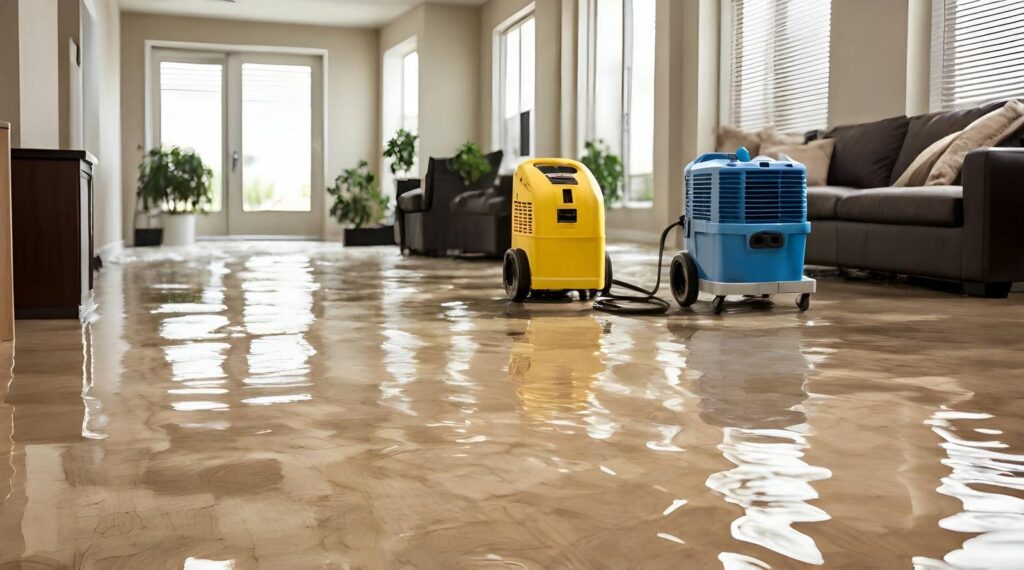
Once the water source is contained, you need to dry everything fast to stop mold from taking hold. Open windows, run fans, and use dehumidifiers to pull moisture out of air and materials.
Move air across walls, floors, and hidden corners, because trapped dampness drives mold growth. Lift wet rugs, baseboards, and furniture cushions so airflow reaches both sides.
Check the humidity with a meter and keep it under 60% if you can. Blot standing water with clean towels, then keep applying drying techniques until surfaces feel dry.
For mold prevention, keep the area warm, ventilated, and monitored for at least 48 hours. You’re not doing this alone; these steps help your home crew stay ahead of damage and regain control quickly.
Clean Up and Toss Unsafe Items
As you dry the area, sort belongings by what can be cleaned and what’s too damaged to keep.
Use item assessment to check structure, odor, staining, and saturation. If drywall, insulation, carpet pad, or particleboard stayed wet more than 24 to 48 hours, toss them.
Bag contaminated textiles, food, and porous items separately. Handle hazardous materials, including batteries, cleaners, fuel, and pesticides, with gloves and sealed containers; never mix them with household debris.
Label salvageable items for cleaning, then move ruined items out fast to reduce mold and clutter. Keep pathways clear so you can work safely and stay organized with your team.
If an item touched sewage or unknown water, treat it as unsafe and discard it without delay.
Frequently Asked Questions
How Soon Should I Contact My Insurance Company After Flooding?
Contact your insurance company immediately after flooding—ideally within 24 hours—to start the claims process. Your flood insurance carrier can guide you, document damage, and help you avoid delays, preserving your coverage and community support.
When Is Flood Damage Too Severe for DIY Cleanup?
You’ll know it’s too severe for DIY cleanup when water reached electrical systems, sewage, or structural materials. DIY limitations and Safety concerns grow fast, so you should call professionals once contamination, odor, or warping appears.
What Documents Should I Photograph Before Cleanup Begins?
You should photograph insurance policies, IDs, receipts, titles, warranties, and repair records before cleanup starts. Capture damage assessments, serial numbers, and room-wide views. These photos support claims, protect you, and help your recovery team.
How Can I Protect Electrical Systems After Flood Exposure?
You protect systems by cutting power, drying components, and arranging professional circuit inspection. Electrical safety comes first: don’t energize wet wiring, replace damaged outlets, and test grounding before you reconnect anything.
Which Professionals Should Inspect Hidden Structural Damage?
You should hire a licensed structural engineer first, then a certified building inspector and a mold remediation specialist. They’ll detect hidden damage, verify structural integrity, and help you feel confident your home’s safe again.
Conclusion
Flood cleanup can feel backward: the sooner you act, the less you have to fix later. You’ve already shut off the water, moved salvageable items to dry ground, and started drying the space fast. Keep humidity below 60% with fans and dehumidifiers, then remove anything unsafe before mold and structural damage spread. If you stay methodical now, you’ll save more, discard less, and get your home back sooner.
Recent Posts
7 Best Toilet Overflow Water Damage Inspection
When you inspect toilet overflow water damage, you need to move fast and check the
7 Tips for Home Water Damage Assessment
Could a quick visual check reveal water damage before it spreads? Water damage assessment starts
7 Home Water Damage Assessment Tips
Could a quick visual check reveal water damage before it spreads? Water damage assessment starts