
Contents
If you spot ceiling stains, swollen drywall, or a musty odor, you need to act fast. Shut off the water source, clear the area, and start drying with fans and dehumidifiers right away. To properly repair water damage, check for hidden moisture, remove damaged materials, and disinfect exposed surfaces. The real challenge starts when water reaches insulation, framing, or mold-prone spaces, and that’s where the next steps matter most.
Key Takeaways
- Shut off the water source immediately and block further intrusion with barriers, cleared drains, and moved belongings.
- Dry the area fast using fans, dehumidifiers, open windows, and moisture meters to find hidden dampness.
- Remove soaked drywall, insulation, carpet pad, and other unsalvageable materials as soon as possible.
- Clean and disinfect affected hard surfaces, then keep airflow steady to reduce mold, corrosion, and lingering moisture.
- Inspect for structural damage, electrical hazards, or sewage contamination, and call emergency water-damage professionals if needed.
Signs of Storm Water Damage to Look For
After a storm, you should inspect your property for signs of water intrusion right away, because damage can spread fast.
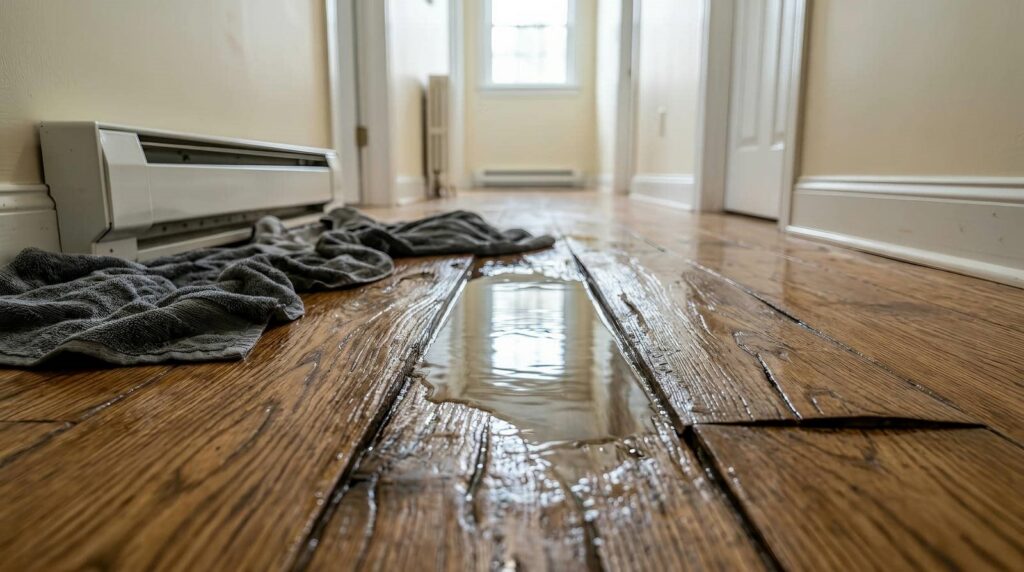
Look for ceiling stains, swollen drywall, peeling paint, warped floors, and musty odors. Check baseboards, window frames, attic insulation, and the lower edges of walls for discoloration or soft spots.
Outside, note roof shingles, flashing, siding, and foundation cracks that show storm impact.
Inside, listen for dripping and feel for dampness around outlets or trim. If you see rust on metal fixtures or muddy residue, document it.
You’re not alone in this process; many homeowners catch problems early by moving room to room with a flashlight.
Quick, careful inspection helps you identify trouble before water intrusion worsens.
Stop Storm Water Before It Spreads
Shut off the source of water as soon as you can, because every minute it keeps flowing increases the damage.
Then clear the area around doors, vents, and low entry points so storm water can’t keep pushing inside.
Check storm drainage for clogs, and remove leaves, mud, or debris so runoff moves away from the structure.
If water is rising, place flood barriers at thresholds, garage openings, and basement entries to redirect flow.
Seal obvious gaps with towels, sandbags, or temporary covers.
Move vehicles, boxes, and gear to higher ground so your team stays organized and safe.
If you share the space with others, assign one person to watch entry points while the rest stabilize the perimeter.
Fast, coordinated action limits spread and protects the structure.
Dry Out Rooms and Hidden Moisture
Once the source is under control, start removing moisture from every affected room and from hidden spaces that hold water. Open windows if weather helps, run dehumidifiers, and set fans to create steady air circulation across floors, walls, and corners.
You’ll dry the space faster when you move furniture slightly off walls and keep doors open between rooms. Use moisture meters to check drywall, baseboards, subfloors, and insulation pockets, because surfaces can feel dry while cores stay wet.
Track readings each day and keep equipment running until levels match normal indoor conditions. If you work methodically, you’ll protect your home and stay on the same recovery path as everyone else restoring theirs after storm damage.
Consistent drying now prevents lingering dampness, odors, and hidden growth later.
Remove Storm-Water-Damaged Materials Safely
Start removing storm-water-damaged materials as soon as they’re safe to handle. You’ll protect your structure by clearing out soaked drywall, insulation, carpet pad, and warped particleboard before they spread damage.
Use removal techniques that limit dust and extra tearing: score drywall, cut in manageable sections, and lift flooring from an edge. Wear gloves, boots, eye protection, and a fitted respirator if debris is dirty.
Bag loose debris, stack salvageable items separately, and keep walk paths clear so your crew can work efficiently and safely. Check local rules for material disposal, since storm debris may need special pickup or drop-off.
Work methodically, label rooms as you clear them, and stay in sync with your team so everyone knows what stays, what goes, and what gets hauled away.
Disinfect Areas Exposed to Storm Water
Wear protective gear before you clean any area exposed to storm water, including gloves, boots, eye protection, and a respirator if needed.
Scrub contaminated surfaces with detergent and water to remove residue and organic matter, then rinse and dry them.
Apply a disinfectant that’s rated for the surface and follow the label’s contact time so it can reduce remaining pathogens effectively.
Wear Protective Gear
Before you disinfect any area exposed to storm water, put on waterproof gloves, boots, long sleeves, eye protection, and an N95 or similar respirator if mold or aerosolized contaminants are present.
Your protective clothing and safety equipment create a barrier that keeps you in the team and out of harm’s way. Check every item before you start so you’re not exposed through rips, gaps, or fogged lenses.
Keep a clean exit path, and remove gear carefully after the task.
- Seal cuffs and boot tops to limit splash exposure.
- Replace wet or damaged gear immediately.
- Wash hands and exposed skin after removal.
Stay consistent with your gear each time you work. It helps you protect yourself, support your household, and handle recovery with confidence.
Clean Contaminated Surfaces
Once the area is safe to enter, clean and disinfect every surface touched by storm water, because floodwater can carry sewage, chemicals, and other pathogens.
Start with hard, nonporous surface materials, then move to porous items you can’t salvage. Remove mud, silt, and debris with detergents, warm water, and scrub brushes. Use cleaning techniques that lift residue instead of spreading it, and rinse often so contamination doesn’t settle back.
Wipe from the cleanest zone to the dirtiest, and change cloths when they foul. For drywall, insulation, and carpet padding, removal usually works best.
Keep airflow steady so surfaces dry faster, and inspect hidden edges, seams, and joints for trapped grime. Your team can restore a safer, cleaner space together.
Use Disinfectant Properly
After cleaning, disinfect every flood-touched hard surface to reduce bacteria, viruses, and mold spores left behind by storm water.
Choose disinfectant types that match the material, and follow the label exactly for dilution, contact time, and ventilation. You’re not alone here; every careful step protects your space and your people.
Use a bleach solution, quaternary ammonium product, or EPA-registered disinfectant for nonporous surfaces.
Apply with clean cloths, mops, or sprayers, keeping the surface visibly wet for the required dwell time.
Rinse food-contact areas with clean water after disinfection, then let everything air-dry.
Wear gloves, eye protection, and a mask if fumes build up.
Test hidden spots first, and repeat application techniques if residue or odor remains.
Check for Mold and Structural Damage
Check for mold growth on walls, trim, insulation, and subfloors, especially in damp or hidden areas.
Inspect for structural weakness such as sagging ceilings, warped framing, soft drywall, or cracked finishes that may signal deeper damage.
Use a flashlight to inspect cavities, corners, and baseboards so you can catch hidden damage before it spreads.
Mold Growth Signs
When water damage lingers, mold can start growing within 24 to 48 hours. So inspect damp areas quickly for musty odors, visible discoloration, and fuzzy or slimy patches on drywall, wood, insulation, and carpet.
You can protect your space and keep your household confident by acting fast. Use these mold prevention tips and mold removal methods to limit spread:
- Check hidden corners, baseboards, and closets with a flashlight.
- Mark any stained or damp spots and monitor them daily.
- Clean small affected areas only if surfaces are nonporous and dry fast.
If you notice a strong odor or repeated spotting, treat it as active growth and move to drying and cleanup immediately.
Quick checks help you stay in control and support a healthier home together.
Structural Weakness Clues
Mold often appears alongside hidden structural damage, so inspect the building itself as soon as you spot staining, swelling, or sagging.
You should check floors, walls, ceilings, and trim for warping, separation, or soft spots. Pay close attention to doors and windows that suddenly stick; they can signal frame movement.
Test for spongy subfloors and cracked drywall seams, then note any floor bounce or unevenness. These clues help you judge foundation stability before repairs start.
If beams, joists, or studs look bowed, don’t ignore them; schedule a load bearing assessment right away.
You’re not handling this alone—your crew can catch weak points early and keep the structure safe, dry, and ready for proper restoration.
Hidden Damage Inspection
Even after visible water is gone, hidden damage can keep spreading behind walls, under floors, and above ceilings. You need to inspect for mold and structural failure before repairs start, so your home stays safe and your crew stays confident.
Use moisture detection tools to find hidden leaks in framing, insulation, and subflooring. Smell for mustiness, check for staining, and probe soft drywall or warped trim.
- Measure damp zones with a meter.
- Look for mold growth around joints and vents.
- Test joists, studs, and flooring for rot.
If readings stay high, open the area and dry it fully. You’re protecting the space, the structure, and everyone who belongs there.
When to Call Storm Water Damage Experts
If stormwater has flooded your home, you should call storm water damage experts as soon as you see contaminated water, widespread saturation, or structural damage.
You need emergency response when water reaches electrical systems, HVAC ducts, insulation, or load-bearing materials. A professional assessment helps you confirm the moisture path, identify hidden contamination, and set the right drying plan before damage spreads.
Call immediately if you smell sewage, see mud or debris, or notice warped flooring, sagging ceilings, or bubbling paint. You’ll protect your home faster when trained crews measure moisture, isolate affected zones, and document conditions for repairs.
If you wait, mold, corrosion, and structural weakening can escalate quickly. Acting early keeps your recovery organized, efficient, and safer for everyone in your household.
Find Emergency Storm Water Repair Near You
Once you’ve confirmed stormwater damage, move quickly to locate emergency repair crews near you who can assess, extract water, and start drying right away.
Search for emergency services with 24/7 dispatch, documented storm response, and moisture mapping tools. Call local contractors who can arrive fast, identify hidden saturation, and secure affected rooms before mold starts.
- Verify they serve your ZIP code and can start within hours.
- Ask for IICRC-certified technicians, water extraction, and dehumidification equipment.
- Request a written scope, photos, and insurance-ready documentation.
You’ll work best with a team that communicates clearly and treats your home like part of the neighborhood.
Fast, local help reduces structural loss, protects contents, and gets you back to normal sooner.
Frequently Asked Questions
How Soon Should Insurance Be Notified After Water Damage Occurs?
Notify your insurer within 24 hours, or as soon as you can; waiting can complicate your claim process and coverage. You’ll protect your benefits, document damage fast, and stay connected with your coverage team.
Can I Use a Shop Vac to Remove Standing Water Safely?
Yes, you can use a shop vac for water extraction if you follow safety precautions: unplug nearby circuits, wear boots, and avoid deep water. Like a trusty steed, you’ll move quickly, but don’t overfill the tank.
Is It Safe to Turn on Ceiling Fans After Flooding?
No, you shouldn’t turn on ceiling fans until you verify fan safety and moisture control. You’ll spread dampness and risk shorts. Turn off power, dry the area, and use dehumidifiers and professional inspection instead.
What Documents Should I Photograph for a Water Damage Claim?
Photograph claim essentials: damage assessment, affected rooms, walls, floors, ceilings, belongings, serial numbers, moisture readings, invoices, and restoration reports. You’ll build your case like a detective tracing footprints, and you’ll feel covered, not alone.
How Do I Protect Valuables Before Repairs Begin?
You should move valuables into airtight valuables storage, then label each container. Pack an emergency kit with documents, chargers, and medications. Keep items elevated, dry, and inventoried, so you’ll stay organized and connected.
Summary
In the rush to save your home, the wet spot on the ceiling is never “just a stain.” You catch storm water damage fast, shut it down, dry it out, and remove what cannot be saved. Then you disinfect, inspect for mold, and watch for hidden structural trouble—because water loves a secret. If the damage looks bigger than your tools, call experts right away and get emergency repair before a small leak turns into a costly disaster.
Recent Posts
7 Tips for Home Water Damage Assessment
Could a quick visual check reveal water damage before it spreads? Water damage assessment starts
7 Home Water Damage Assessment Tips
Could a quick visual check reveal water damage before it spreads? Water damage assessment starts
10 Best Home Water Damage Assessment Tips
If you suspect water damage, you need to move quickly and assess it methodically. Home