
Contents
A broken pipe can turn a quiet system into a hidden fault line. You need Broken Pipe Damage Repair when leaks, cracks, or bursts disrupt water flow or threaten your property’s structure. First, you isolate the line and assess the extent of the water damage, then repair or replace the failed section using the most effective method. Some fixes are simple, while others require trenchless technology or professional cleanup support. The real question is which signs tell you it’s time to act.
Key Takeaways
- Broken pipe damage repair fixes leaks, cracks, or bursts to stop water loss and prevent further structural damage.
- The first step is shutting off the main water supply and calling an emergency plumber or repair service.
- Repair professionals inspect the pipe, locate hidden damage, and assess water damage in walls, floors, and ceilings.
- Common repairs include clamps, epoxy patches, pipe section replacement, or trenchless lining, depending on pipe type and damage severity.
- After repair, affected areas are dried, cleaned, and monitored to prevent mold, corrosion, and recurring leaks.
Signs You Need Pipe Repair
If you notice damp spots, recurring leaks, low water pressure, or discolored water, you may need pipe repair.
You can also listen for rattling sounds, check for musty odors, and watch for stains on walls, ceilings, or flooring. These signs often point to hidden pipe corrosion or a developing crack in your line.
When water pressure drops, your system may be losing flow through a damaged section or an internal blockage. You shouldn’t ignore small changes, because they usually get worse fast.
Inspect exposed pipes, especially near joints, valves, and older fittings. If you’re seeing repeated issues in the same area, your plumbing likely needs professional attention.
Quick action helps you protect your home, stay confident, and keep your system working as it should.
What to Do After a Pipe Bursts
When a pipe bursts, shut off the main water supply immediately to stop further flooding.
Then cut power to any affected area if it’s safe to do so and move valuables out of the water path.
Call an emergency repair service right away so they can isolate the damage and begin repairs.
Shut Off Water
First, shut off the main water supply to stop more water from entering the pipe and causing additional damage. You’ll usually find the valve near the water meter, basement wall, or curb box.
Turn it clockwise until it stops, then confirm the flow has ceased by opening a faucet briefly. If you share a home, tell everyone so no one restores pressure by mistake.
This water shutoff step protects floors, walls, and electrical systems while you assess the area. Keep a wrench or shutoff key accessible as part of your emergency preparedness routine, so you can act fast when a burst happens.
Once the water is off, stay calm, document the leak, and clear the space for safe inspection.
Call Emergency Repair
With the water shut off, call an emergency pipe repair service right away so a plumber can assess the break and limit further damage.
You need a fast emergency response because standing water can weaken framing, ruin finishes, and spread hidden moisture.
When you speak with the dispatcher, give your address, the pipe location, and whether the leak is active.
Stay near the shutoff point if it’s safe, and keep pets and family clear of the area.
A technician can make a quick assessment, isolate the failure, and explain the repair path. That lets you act with confidence and keep your home’s recovery on track.
Document visible damage with photos, but don’t reopen valves or test fixtures until the plumber says it’s safe.
How Water Damage Is Assessed
You start by inspecting visible damage on walls, floors, ceilings, and baseboards to map the spread of water.
Then you use moisture detection tools to find hidden saturation behind finishes and inside structural materials.
This assessment shows you what needs drying, removal, or repair before you move ahead.
Visual Damage Inspection
A careful visual inspection reveals how far pipe water has traveled and which materials need attention. You start leak detection by tracing stains, swelling, peeling paint, warped trim, and loose flooring.
Your visual assessment should map the source area, nearby walls, ceilings, cabinets, and baseboards, because water often spreads beyond the break. Check for discoloration, rust, and sediment lines that mark the highest wet point.
You’ll also note soft drywall, buckled wood, and damaged insulation at exposed edges. Photograph each finding so your repair team can compare conditions and plan the right response.
When you inspect methodically, you stay in control and feel confident that nothing important gets missed. This clear first pass helps your crew protect the property, limit demolition, and restore a safe, familiar space quickly.
Moisture Detection Tools
After the visual inspection narrows the likely wet zones, moisture detection tools confirm what’s hidden inside the structure. You use moisture meters to measure drywall, framing, and flooring, then compare readings to dry areas.
Infrared cameras show temperature differences that often reveal damp cavities behind walls, under cabinets, or around pipe chases. Together, they help you map the leak without unnecessary demolition.
- Check suspect surfaces first.
- Scan adjacent rooms for spread.
- Mark elevated readings and cold spots.
- Recheck after drying to verify progress.
When you understand the data, you can act with confidence and stay part of a repair process that protects your home.
These tools don’t guess; they guide your next move, reduce waste, and support accurate restoration planning.
How Pipe Repair Works
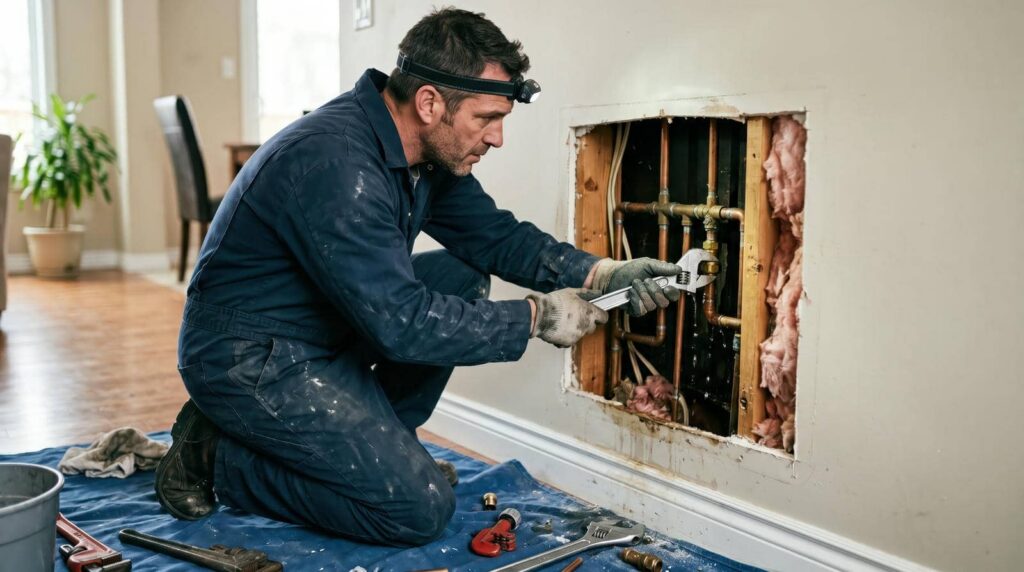
Pipe repair starts with isolating the damaged section, then draining or shutting off the water supply so the pipe can be safely accessed.
You then inspect the line to confirm the leak, measure the affected area, and match the fix to the pipe types in your system.
Next, you clean the surface so repair materials can bond or seal properly. A tight patch, coupling, or replacement segment restores flow when the cut section’s too compromised.
You’ll also check alignment, support, and pressure so the repaired pipe stays stable under normal use.
When you work methodically, you protect your home and join the group of owners who keep small damage from becoming bigger failures.
Each step should leave the line secure, dry, and ready for service.
Common Broken Pipe Repair Methods
When a pipe breaks, you usually choose the repair method based on the material, damage size, and access. You can often use four common options:
- Clamp or epoxy patch for small leaks.
- Section replacement when the break is localized.
- Trenchless technology, such as pipe lining, when you want to avoid major digging.
- Pipe insulation upgrade after repair to reduce freeze stress and protect nearby runs.
You’ll match the method to copper, PVC, or steel and confirm joint compatibility.
If the pipe sits in a tight wall or slab, you’ll usually favor less invasive work.
With the right fix, you keep your system reliable and stay in control with the rest of your crew.
When to Call Water Damage Cleanup Experts
If the break has already soaked drywall, flooring, insulation, or framing, bring in water damage cleanup experts right away.
You need them when moisture keeps spreading, odors develop, or stains return after surface drying. They’ll inspect hidden cavities, meter moisture, remove wet materials, and dry the structure to safe levels.
If you see sagging ceilings, warped subfloors, or electrical risks, don’t wait. Call fast after sewage, contaminated water, or a long leak, too.
You can still handle preventive maintenance later, but active damage needs pros now. Their equipment and documentation help you protect your home, reduce mold risk, and support insurance claims.
Use these plumbing tips: shut off the supply, document the scene, and keep everyone out until the area’s safe.
Frequently Asked Questions
Does Broken Pipe Damage Repair Include Mold Prevention?
Yes, it can; you should expect water damage mitigation to include mold prevention, and if growth starts, you’ll need mold remediation. You’ll also want drying, antimicrobial treatment, and monitoring to protect your home.
Can Insurance Cover Broken Pipe Damage Repair Costs?
Yes, your insurance can cover broken pipe damage repair costs, but policies vary. You should review your insurance policies and start the claim process fast—like catching a leak before it becomes a flood, protecting your home’s future.
How Long Does Broken Pipe Damage Repair Usually Take?
You’ll usually finish broken pipe damage repair in one to three days, depending on leak location, pipe detection, damage extent, and repair techniques. You can restore service faster when you coordinate promptly and keep communication clear.
Is Pipe Replacement Better Than Repair for Old Plumbing?
Yes, you’ll usually benefit more from replacement if your old plumbing has low pipe longevity or repeated leaks; it often lowers repair costs long term and helps you feel confident your system’ll stay reliable.
What Materials Are Used in Broken Pipe Damage Repair?
You’d use PVC, copper, epoxy putty, fiberglass wrap, and clamps for broken pipe damage repair. Nearly 1 in 5 homes face leaks yearly, so your pipe repair techniques and repair material options should fit your system.
Conclusion
When you spot damp walls, low pressure, or a sudden bill spike, you’re often seeing the same problem from different angles: a broken pipe. If you act fast, shut off the water, and call in the right repair and cleanup help, you can limit damage and restore the system before small leaks become major failures. Coincidence can make the warning signs seem random, but they usually point to one clear fix: prompt, professional repair.
Recent Posts
7 Tips for Home Water Damage Assessment
Could a quick visual check reveal water damage before it spreads? Water damage assessment starts
7 Home Water Damage Assessment Tips
Could a quick visual check reveal water damage before it spreads? Water damage assessment starts
10 Best Home Water Damage Assessment Tips
If you suspect water damage, you need to move quickly and assess it methodically. Home